





Insights
Practical legal insights
Explore recent articles, concise guidance, and expert commentary from the ANK & Partners team.
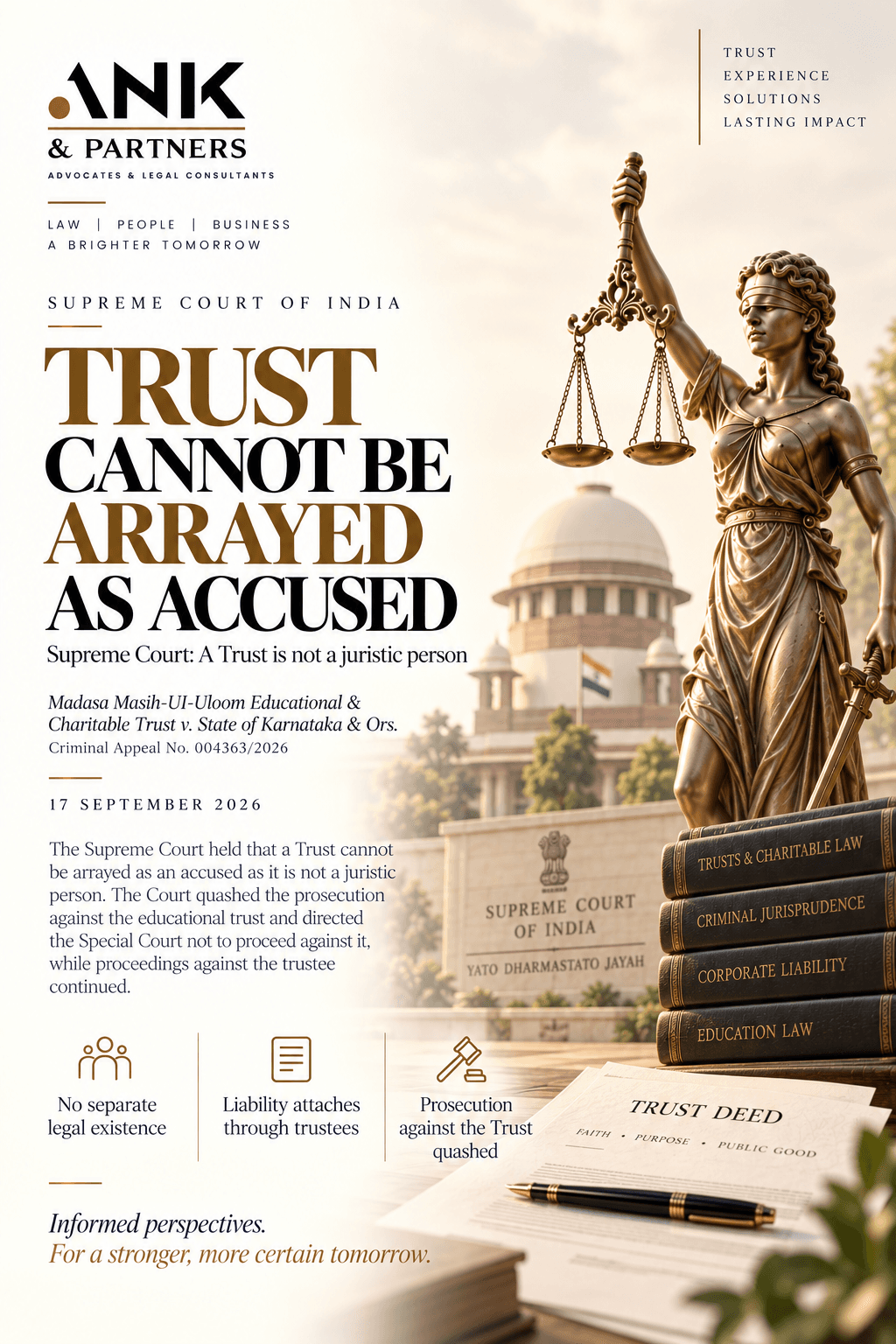
Supreme Court: Trust Cannot Be Arraigned As Accused, Being Not A Juristic Person
The Supreme Court has held that a trust, not being a juristic person with a separate legal existence, cannot be arrayed as an accused in criminal proceedings. The Court directed that prosecution against the trust be discontinued, while proceedings against the trustee and other accused continue.
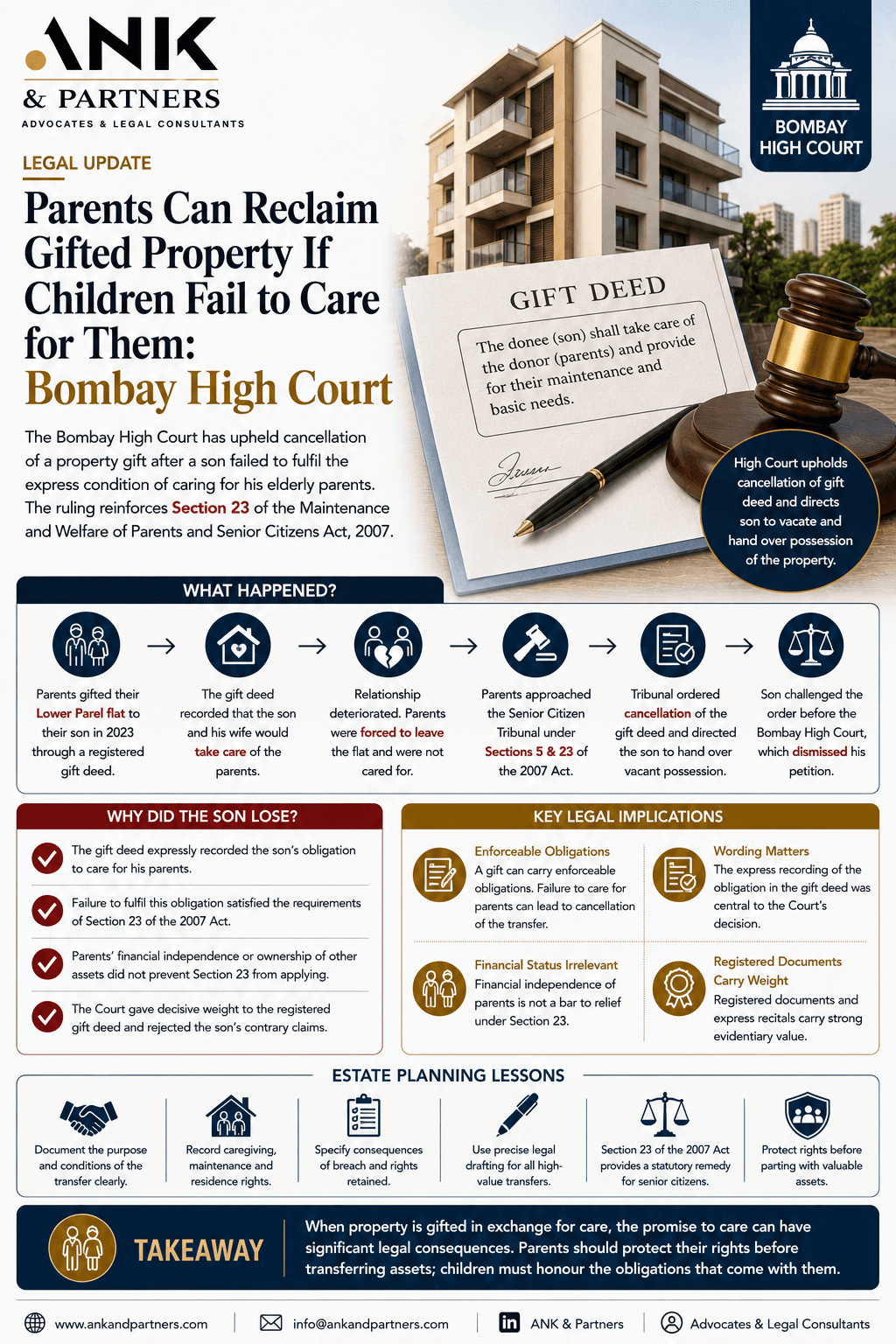
Parents Can Reclaim Gifted Property If Children Fail to Care for Them: Bombay High Court
The Bombay High Court has upheld cancellation of a property gift after a son failed to fulfil the express condition of caring for his elderly parents. The ruling highlights the importance of Section 23 of the Maintenance and Welfare of Parents and Senior Citizens Act, 2007, and the need for carefully drafted gift deeds.
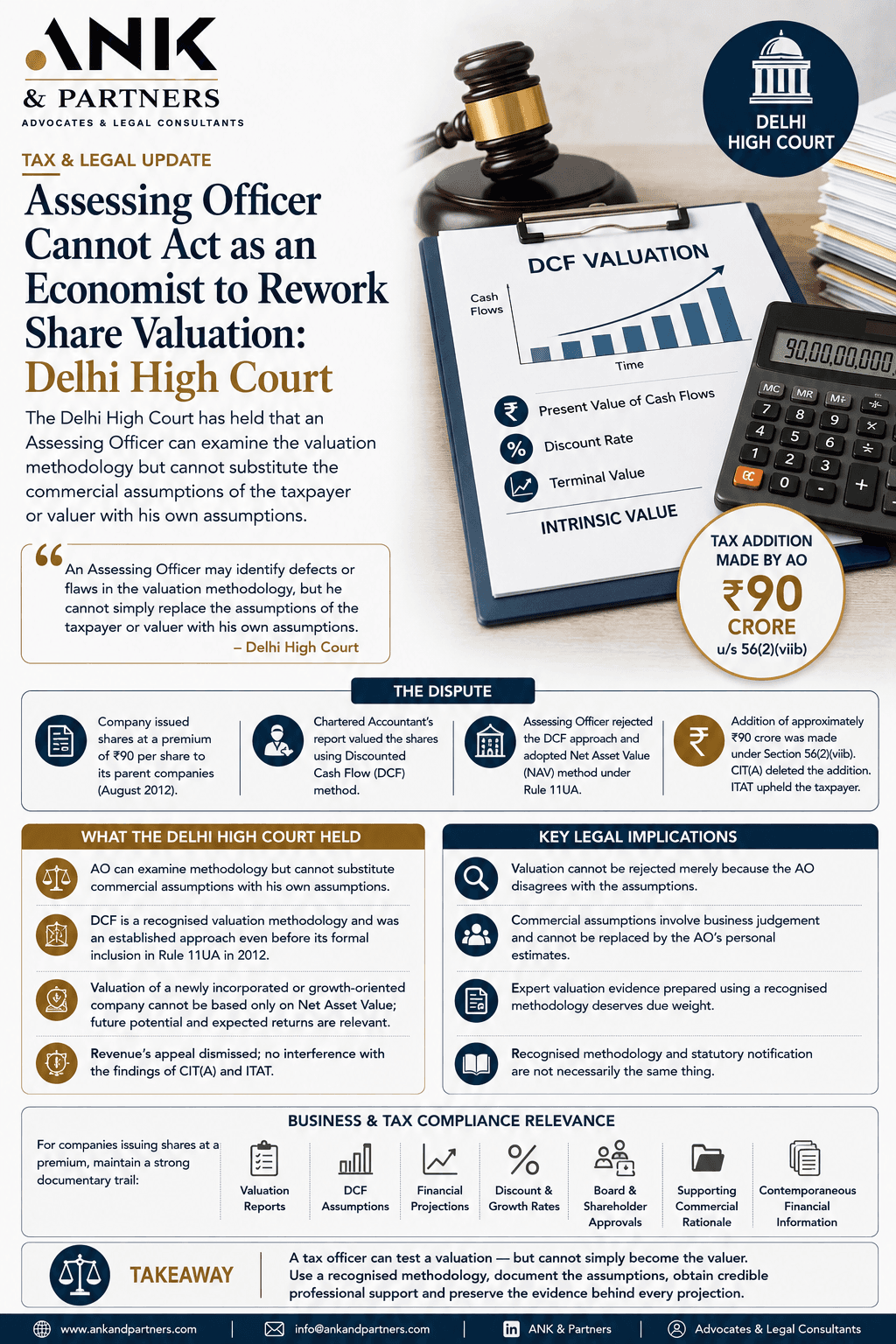
Assessing Officer Cannot Act as an Economist to Rework Share Valuation: Delhi High
The Delhi High Court has held that an Assessing Officer may identify genuine flaws in a taxpayer’s share valuation methodology but cannot replace the commercial assumptions underlying a recognised DCF valuation with his own estimates of expected returns. The ruling reinforces the importance of valuation methodology, expert evidence and judicial restraint in tax assessments.
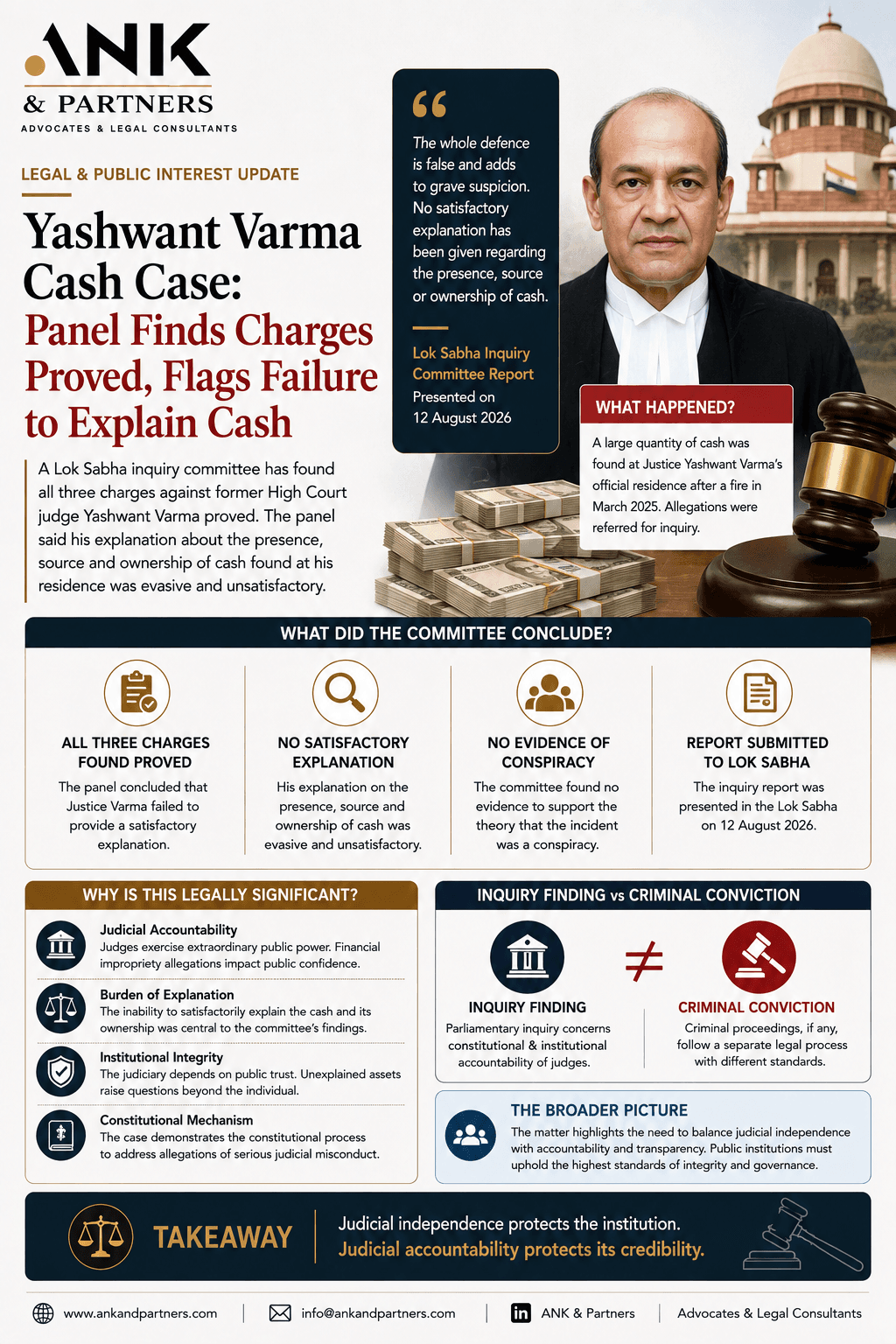
Yashwant Varma Cash Case: Panel Finds Charges Proved, Flags Failure to Explain Cash
A Lok Sabha inquiry committee has found all three charges against former High Court judge Yashwant Varma proved in connection with cash found at his official residence. The panel said his explanation regarding the presence, source and ownership of the cash was evasive and unsatisfactory, raising significant questions of judicial accountability and institutional integrity.
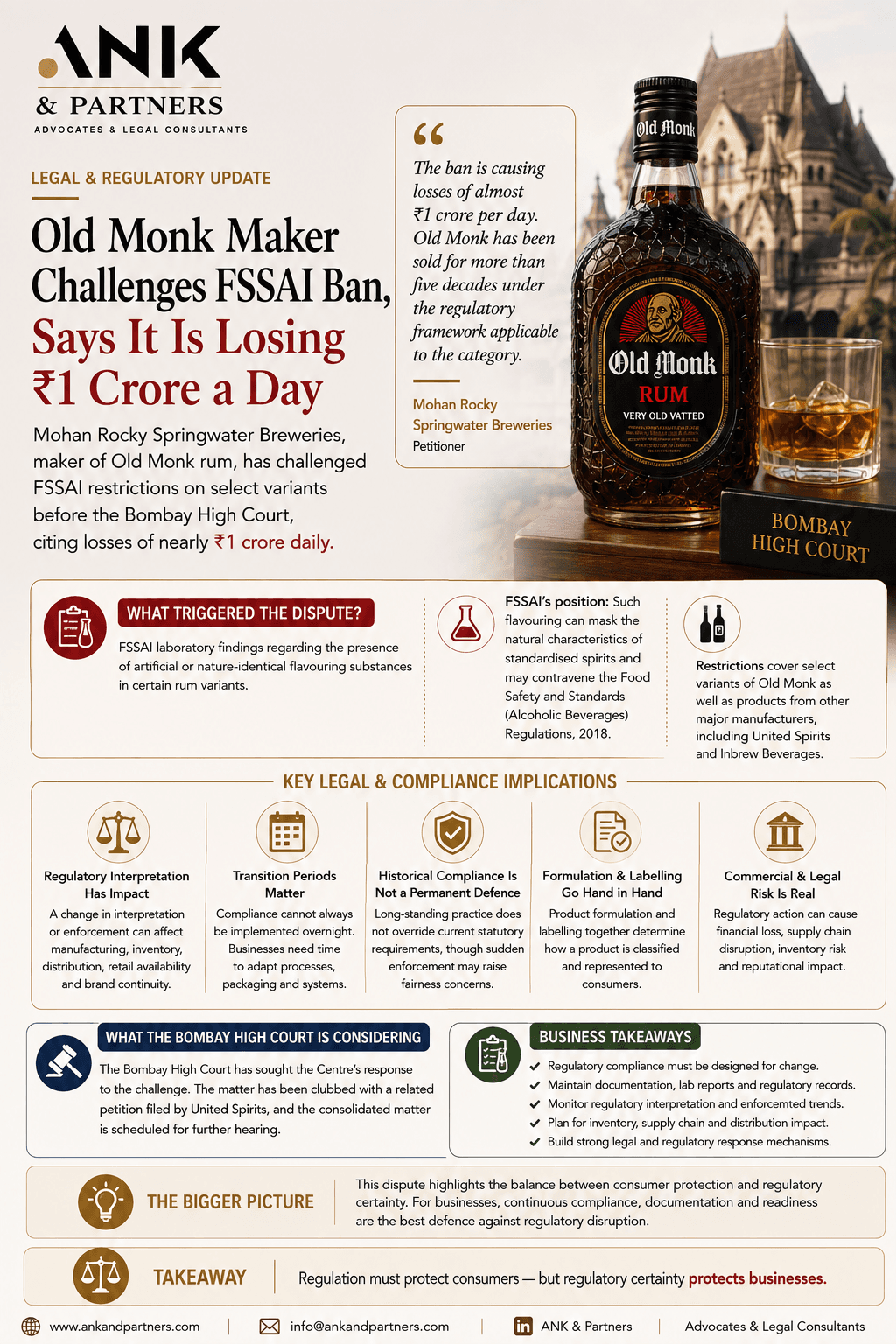
Old Monk Maker Challenges FSSAI Ban, Citing ₹1 Crore Daily Loss
Mohan Rocky Springwater Breweries, maker of Old Monk, has challenged FSSAI restrictions on select rum variants before the Bombay High Court, claiming losses of nearly ₹1 crore a day. The dispute raises important questions around regulatory interpretation, labelling, transition periods and business disruption.

Paid ₹6.5 Crore, Property Valued at ₹8.85 Crore: ITAT Rejects Unexplained Investment Addition
A Mumbai buyer purchased a Pune property for ₹6.5 crore while its stamp-duty value was ₹8.85 crore. The Income Tax Department treated the ₹2.35 crore difference as unexplained investment under Section 69B, but ITAT Mumbai granted relief, holding that higher stamp-duty valuation alone does not establish undisclosed payment.