Tenant Police Verification: Who Is Responsible—Tenant, Landlord or Broker?
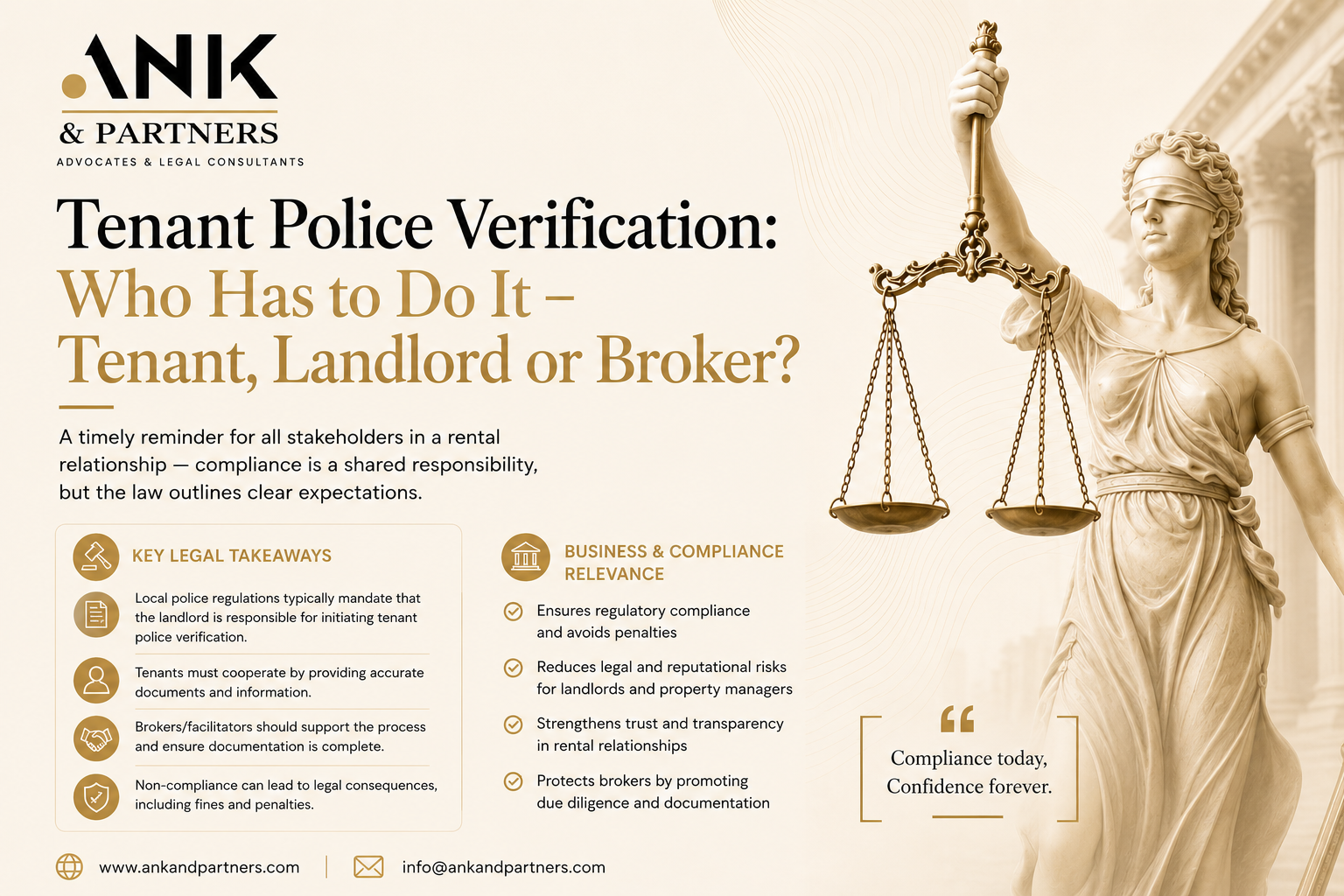
Tenant police verification is often viewed as a routine administrative formality. In reality, it serves an important legal and public safety function by helping authorities maintain accurate occupancy records and promoting responsible tenancy practices.
Although specific requirements vary across states and cities, police verification has increasingly become an essential aspect of residential leasing.
Who is primarily responsible?
In many jurisdictions, the responsibility for initiating police verification rests primarily with the landlord or property owner.
However, successful compliance requires cooperation from all stakeholders.
Landlords should:
- Initiate verification promptly.
- Collect tenant identification documents.
- Submit prescribed forms.
- Maintain verification records.
Tenants should:
- Provide accurate identity and address proof.
- Cooperate with documentation requirements.
- Furnish truthful information.
Brokers or property managers should:
- Facilitate document collection.
- Assist both parties during the verification process.
- Ensure required paperwork is complete.
Why police verification matters
Failure to complete verification may expose landlords to:
- Monetary penalties.
- Regulatory action.
- Increased legal complications during investigations.
- Additional liability in certain circumstances.
While penalties differ across jurisdictions, proactive compliance significantly reduces future legal risks.
Best practices for landlords
Landlords should maintain:
- Executed lease agreements.
- Aadhaar or passport copies (where lawfully permitted).
- PAN details where applicable.
- Photographs.
- Police verification acknowledgements.
- Tenant contact records.
- Emergency contact information.
Maintaining organized documentation simplifies dispute resolution and demonstrates responsible property management.
Compliance creates confidence
Police verification protects more than legal interests.
It helps:
- Build trust between landlords and tenants.
- Improve residential security.
- Create transparent rental relationships.
- Reduce identity fraud.
- Support law enforcement when necessary.
Conclusion
Tenant police verification should never be treated as a mere procedural requirement. It represents responsible property management, legal compliance, and sound risk mitigation.
For landlords, tenants, and brokers alike, timely verification contributes to safer communities and more secure rental transactions.