🔒 Can a Bank Share Your Account Details Without Your Consent?
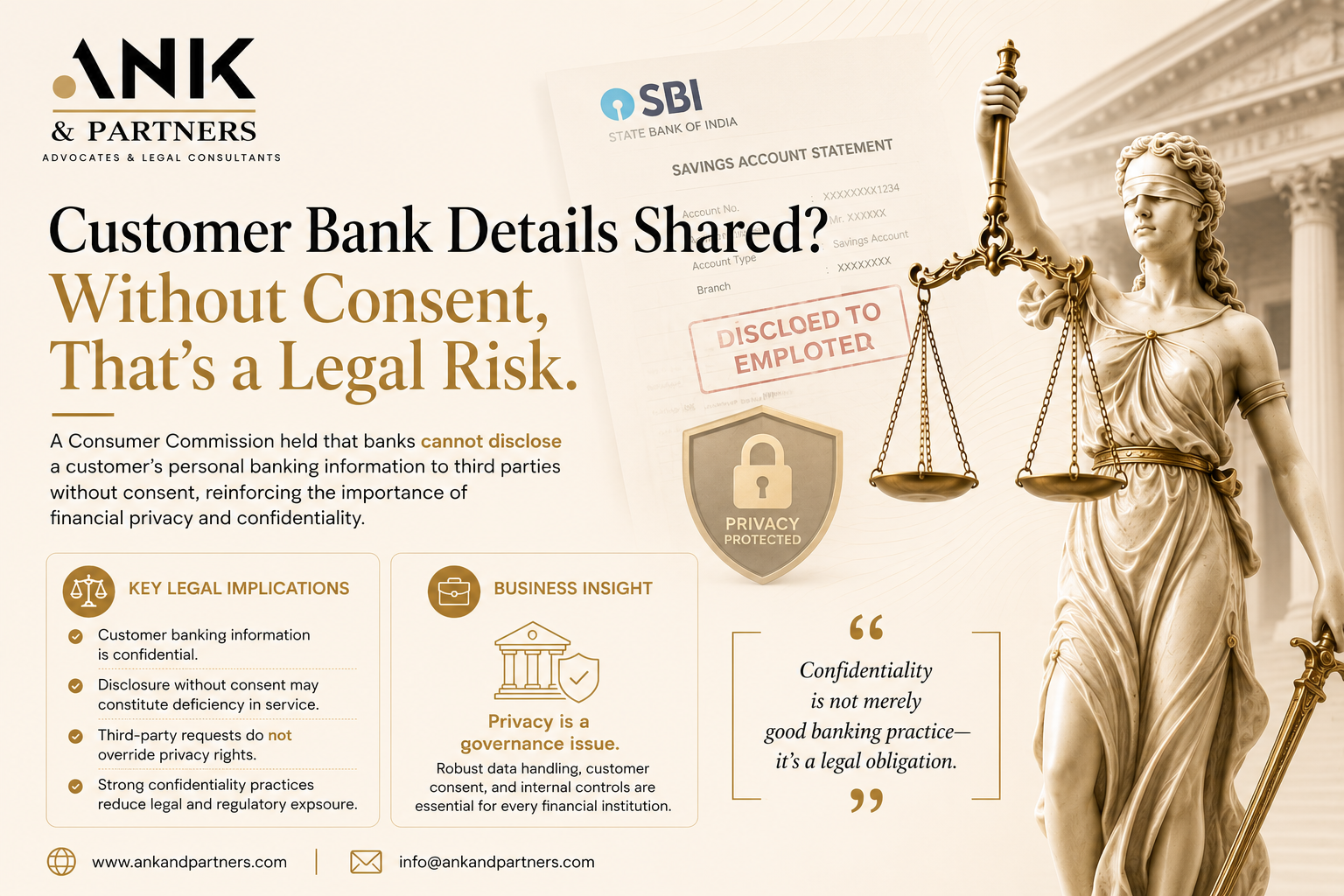
In a significant consumer protection ruling, the District Consumer Commission, Lakhimpur Kheri, held State Bank of India (SBI) liable for disclosing a customer's savings account details to his employer without obtaining his consent. The Commission observed that a bank cannot disclose a customer's personal banking information to a third party without authorization, and such disclosure amounts to deficiency in service. The customer was awarded ₹20,000 as compensation, along with 6% interest, and ₹5,000 towards litigation costs.
Key Legal Implications
✔ Customer banking information is confidential and cannot be shared with third parties without consent.
✔ Employer requests do not override a customer's right to financial privacy.
✔ Unauthorized disclosure may amount to deficiency in service under consumer law.
✔ Financial institutions must maintain robust confidentiality and data governance standards.
Business & Compliance Insight
In today's regulatory landscape, data privacy is no longer just an IT concern—it's a legal obligation.
Banks, NBFCs, fintechs, and financial institutions must ensure that customer information is disclosed only where legally permitted or expressly authorized. A single lapse in handling confidential financial information can lead to litigation, regulatory scrutiny, and reputational damage.
Customer trust is built on confidentiality. Once privacy is compromised, reputation follows.