When judicial orders cite cases that may not even exist, the issue goes beyond legal error—it strikes at institutional credibility.
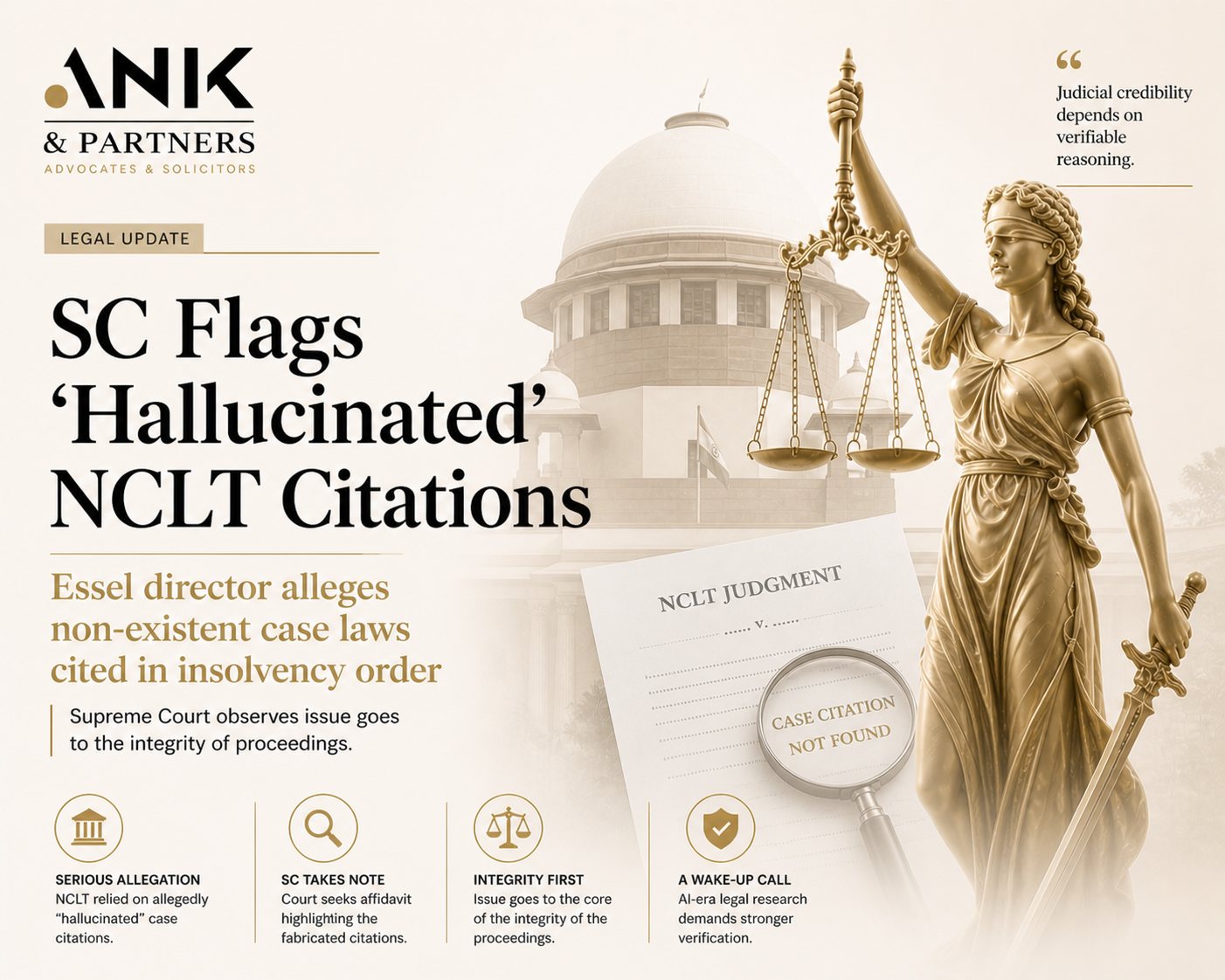
When judicial orders cite cases that may not even exist, the issue goes beyond legal error—it strikes at institutional credibility.
In a startling development, a suspended director of Essel Infraprojects told the Supreme Court that the NCLT Mumbai relied on allegedly “hallucinated” (non-existent) case citations while admitting the company into CIRP.
Senior Advocate Madhavi Divan argued that several judgments referenced by the tribunal could not be verified.
The Supreme Court took the allegation seriously and observed that the issue goes to the “core of the integrity of the proceedings itself.”
The Court has now asked the petitioner to file an affidavit highlighting the allegedly fabricated citations before proceeding further.
Why this matters:
⚖️ Judicial credibility depends on verifiable reasoning
⚖️ AI-era legal research risks are becoming real
⚖️ Tribunal orders require stronger citation scrutiny
⚖️ Due diligence in legal drafting is now more critical than ever
This case could become a defining conversation around the use (and misuse) of AI-assisted legal drafting tools in adjudicatory forums.
Technology can accelerate legal work—
but verification remains non-negotiable.