Received a Section 143(2) Notice? Here's What It Really Means for Taxpayers
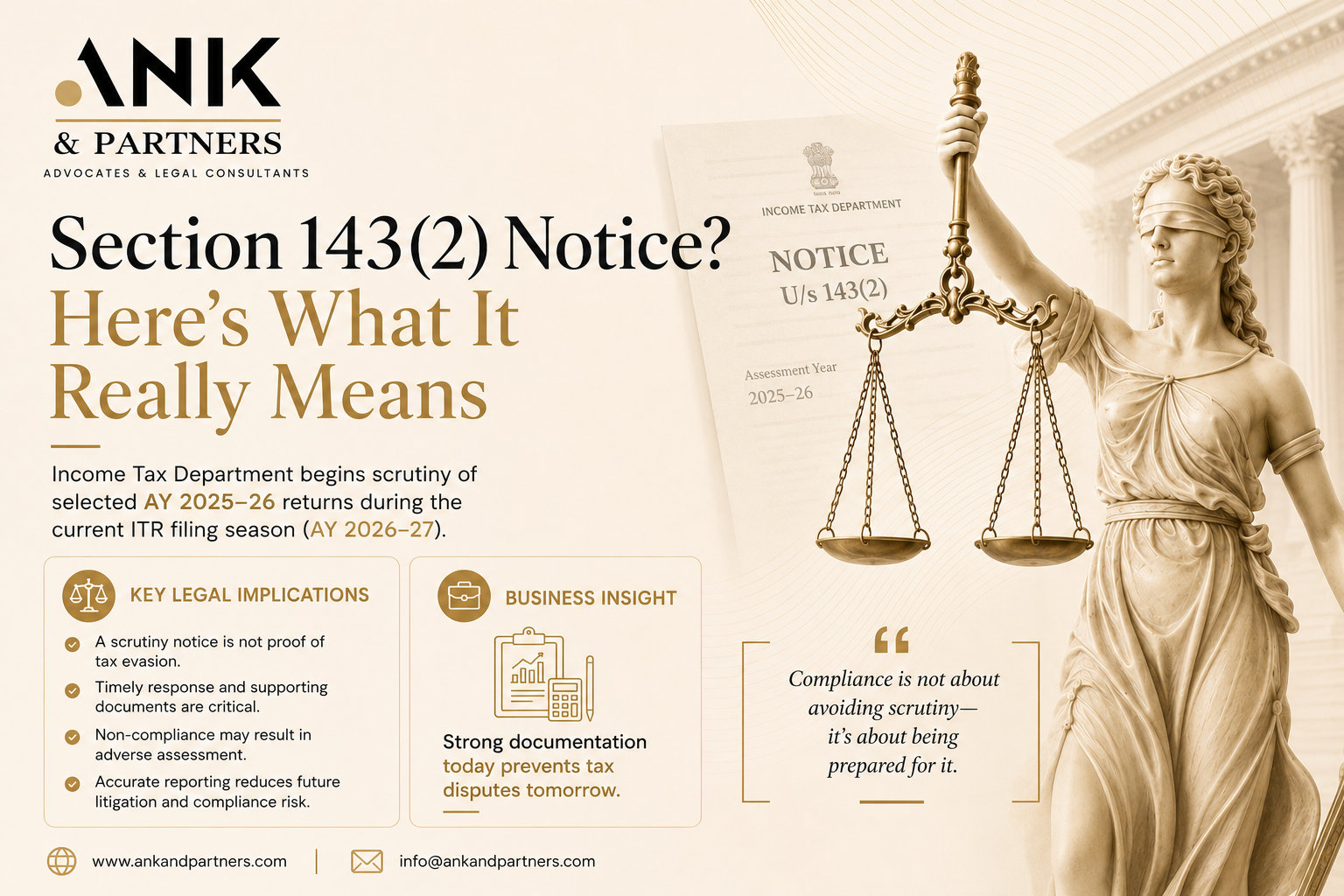
Every tax filing season brings anxiety for many taxpayers, particularly when they receive a notice under Section 143(2) of the Income-tax Act. In reality, such a notice is often misunderstood.
A Section 143(2) notice does not imply wrongdoing. Instead, it signifies that the Income Tax Department intends to examine specific aspects of a filed return through the scrutiny assessment process.
Why is a return selected?
Returns may be selected for scrutiny due to:
- Significant deductions or exemptions claimed.
- High-value financial transactions.
- Mismatch between reported income and available information.
- Risk-based parameters identified by the Department.
- Random selection under prescribed criteria.
Selection alone should never be interpreted as evidence of tax evasion.
What happens during scrutiny?
The Assessing Officer may request supporting documents relating to:
- Income disclosures
- Business expenses
- Capital gains
- Investments
- Bank statements
- Loan transactions
- Property dealings
- Books of account
The objective is to verify whether the return accurately reflects taxable income.
Importance of timely response
Ignoring notices or delaying submissions may lead to adverse assessment orders. Taxpayers should:
- Review the notice carefully.
- Understand the information requested.
- Gather complete supporting documentation.
- Submit responses within prescribed timelines.
- Seek professional advice where necessary.
Businesses should strengthen documentation
Good tax compliance begins long before a notice arrives.
Businesses should maintain:
- Proper accounting records.
- Invoice documentation.
- Bank reconciliations.
- Vendor agreements.
- Payroll records.
- Investment records.
- Tax computation working papers.
Well-maintained documentation allows taxpayers to respond confidently and efficiently during scrutiny.
Conclusion
A Section 143(2) notice represents an opportunity to substantiate the correctness of a filed return—not a presumption of tax evasion.
Preparation, transparency, and timely compliance remain the most effective tools for navigating scrutiny assessments while minimizing future tax disputes.