Once debt and default are clearly established, procedural loopholes may not save a borrower.
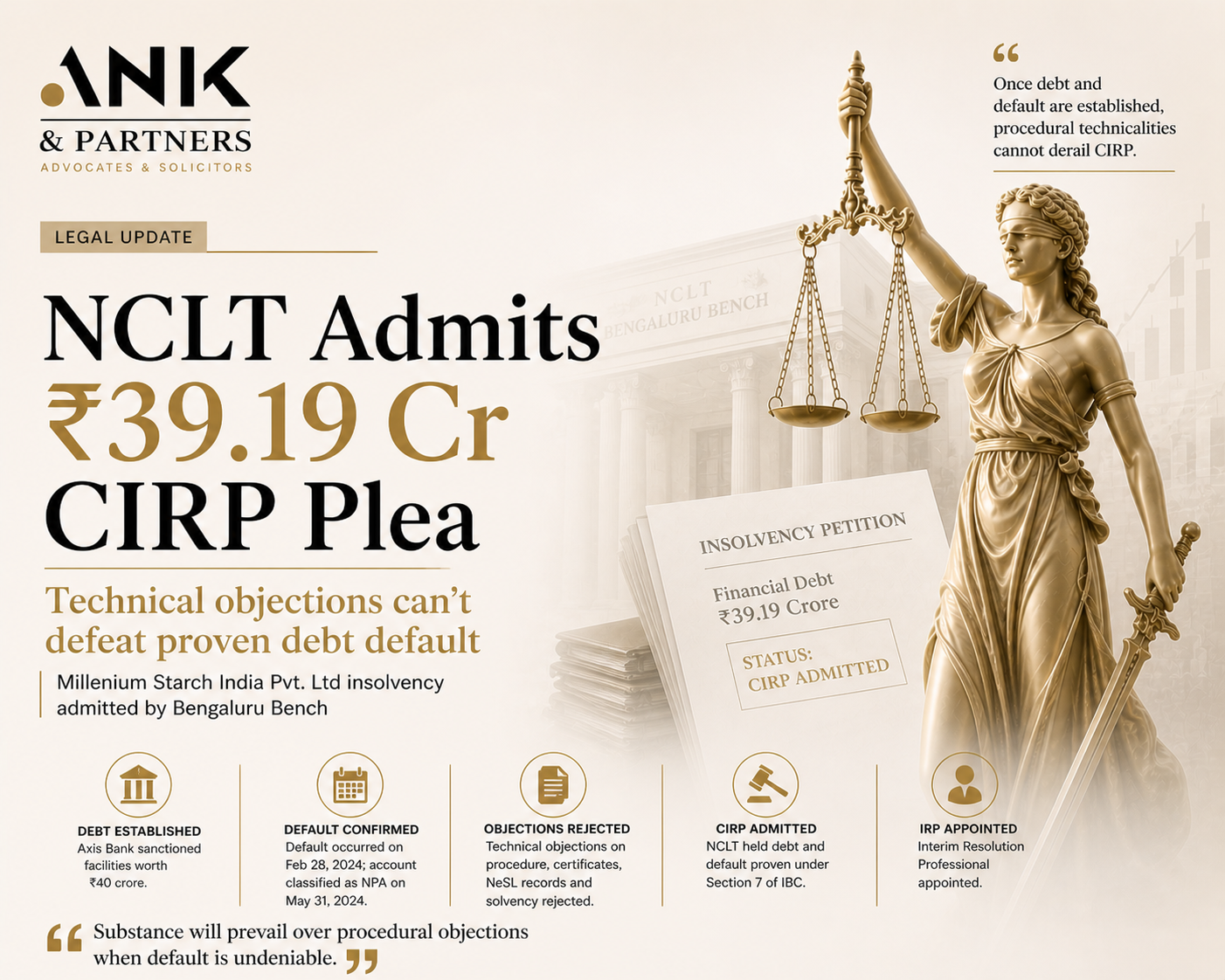
Once debt and default are clearly established, procedural loopholes may not save a borrower.
In a significant ruling, the NCLT Bengaluru Bench admitted insolvency proceedings against Millenium Starch India Pvt. Ltd. after finding a default of ₹39.19 crore, while rejecting multiple technical objections raised by the corporate debtor.
The company argued:
• Procedural defects in the insolvency filing
• Issues with Bankers’ Books certificates
• Incomplete NeSL records
• Lack of proper board authorization
• Claims of continued solvency
• Substantial repayments already made
Despite these objections, the tribunal held that once financial debt and default are sufficiently proven under Section 7 of the IBC, technical objections cannot derail CIRP.
Background:
✔ Axis Bank sanctioned facilities worth ₹40 crore
✔ Default reportedly occurred on February 28, 2024
✔ Account classified as NPA on May 31, 2024
✔ SARFAESI proceedings were initiated before the insolvency petition
✔ NCLT admitted CIRP and appointed an Interim Resolution Professional.
This ruling reinforces a critical insolvency principle:
Substance will often prevail over procedural objections when default is undeniable.
For lenders, promoters, and distressed businesses—documentation strategy matters, but repayment discipline matters even more.