Gujarat HC Denies Bail to Advocate in Alleged Land Fraud Case: A Reminder That Professional Integrity Shapes Bail Decisions
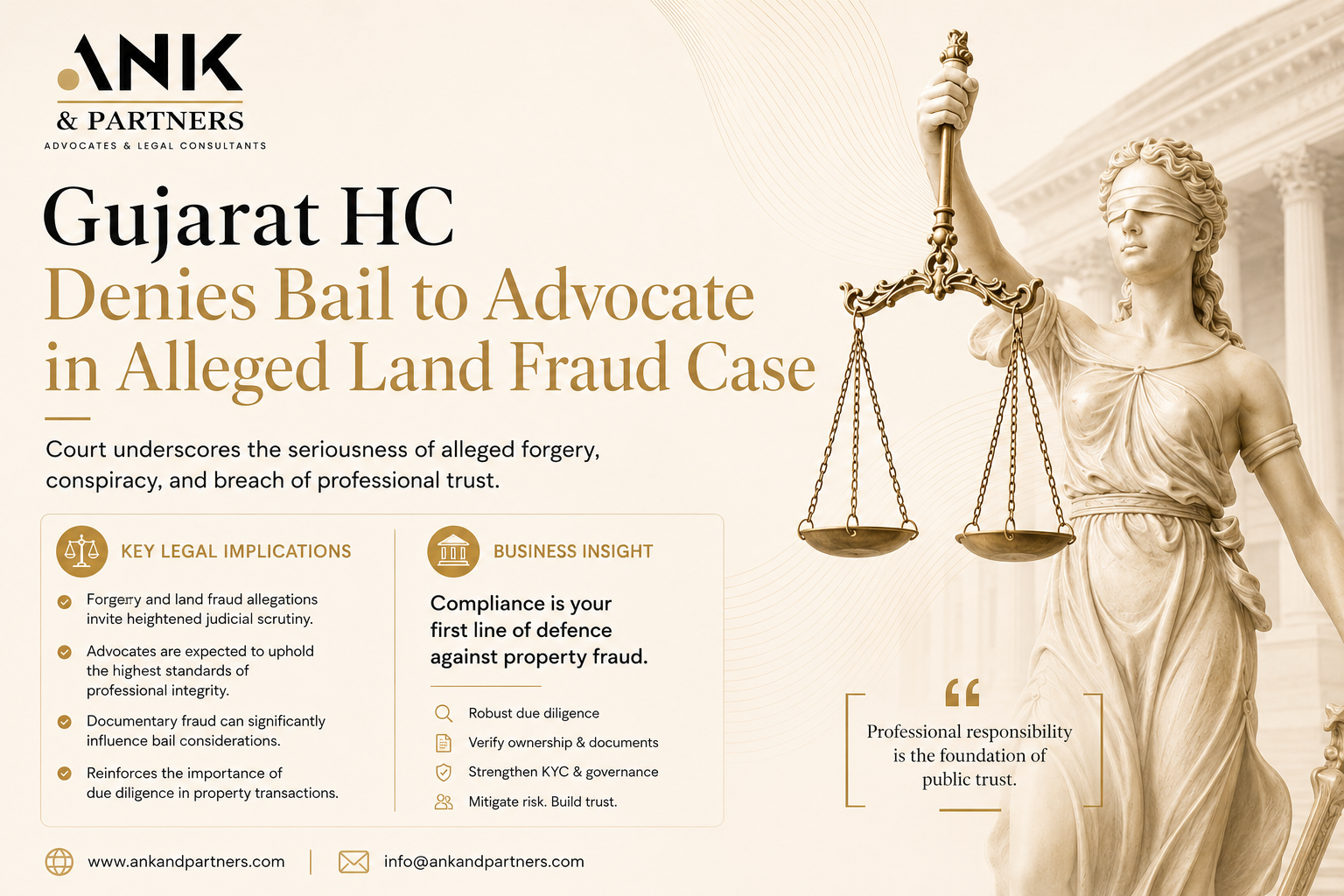
The Gujarat High Court recently declined to grant bail to an advocate accused in an alleged land fraud matter involving accusations of forgery, conspiracy, and manipulation of property records. While the criminal trial is yet to determine guilt or innocence, the Court's observations demonstrate an important judicial approach—where allegations indicate a breach of professional responsibility and the possibility of influencing evidence, courts may adopt a stricter standard while considering bail.
Bail jurisprudence in India has consistently balanced individual liberty against the interests of justice. However, where allegations involve organized economic offences, document fabrication, or abuse of fiduciary responsibilities, courts often recognize that such offences have consequences extending beyond the immediate parties.
Economic offences invite closer judicial scrutiny
Property fraud has become increasingly sophisticated, frequently involving forged title documents, fabricated powers of attorney, impersonation, and coordinated conspiracies among multiple stakeholders. Such offences not only affect individual property owners but also undermine public confidence in the legal and registration framework.
Courts have repeatedly observed that economic offences deserve careful examination because documentary evidence can be extensive, witnesses may be vulnerable to influence, and financial transactions often require detailed investigation.
Higher expectations from legal professionals
Advocates occupy a position of trust within the justice delivery system. Although every accused enjoys the presumption of innocence until proven guilty, allegations involving legal professionals naturally attract greater judicial attention because the legal profession is founded upon ethics, honesty, and public confidence.
When allegations suggest misuse of professional knowledge to facilitate fraudulent transactions, courts may consider this aspect while evaluating the broader circumstances surrounding a bail application.
Lessons for businesses and property owners
The decision also serves as a reminder that preventive compliance remains the strongest defence against property-related disputes.
Individuals and businesses should:
- Conduct comprehensive title verification before acquisition.
- Verify historical ownership records.
- Authenticate powers of attorney and supporting documentation.
- Perform independent legal due diligence.
- Confirm registration records with relevant authorities.
- Maintain complete documentary trails for every transaction.
For developers, lenders, financial institutions, and investors, these verification measures significantly reduce exposure to future litigation and financial loss.
Professional accountability strengthens market confidence
Property markets function effectively only when documentation can be trusted. Courts increasingly recognize that fraudulent documentation weakens investor confidence, delays commercial transactions, and burdens judicial resources.
The legal profession therefore carries an important responsibility—not merely to represent clients, but also to uphold the integrity of legal documentation and transactional processes.
Conclusion
The Gujarat High Court's decision should not be viewed solely through the lens of one bail application. Rather, it reflects the judiciary's broader commitment to preserving public confidence in legal institutions and ensuring that allegations involving forgery and abuse of professional trust receive appropriate judicial scrutiny.
For businesses, investors, and legal professionals alike, the message is clear: robust due diligence, ethical conduct, and documentary accuracy remain indispensable pillars of lawful property transactions.