A private complaint under Section 200 CrPC cannot be used as a backdoor to revive a failed Section 156(3) plea.
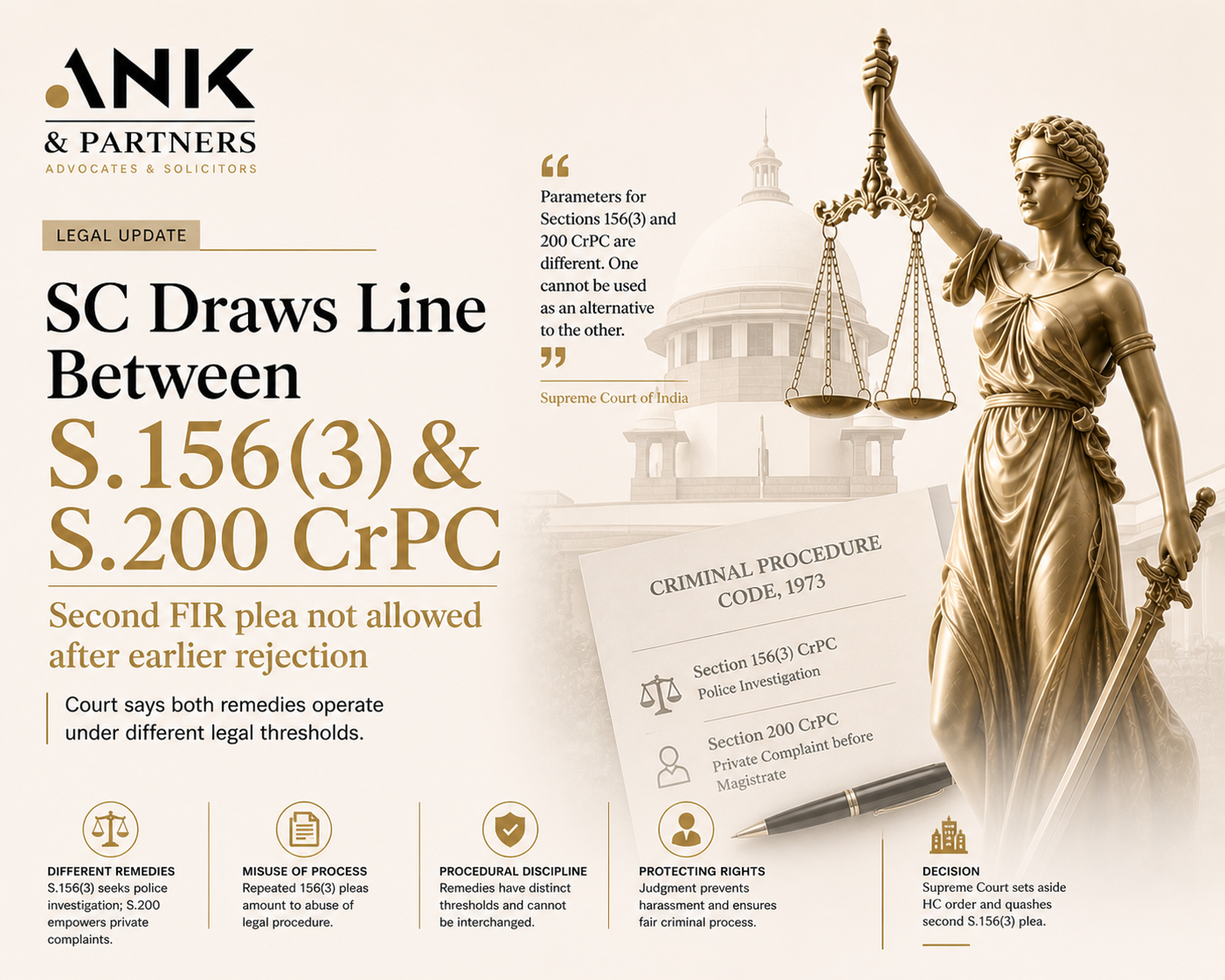
A private complaint under Section 200 CrPC cannot be used as a backdoor to revive a failed Section 156(3) plea.
In an important ruling, the Supreme Court of India clarified that the legal thresholds under Section 156(3) CrPC (seeking police investigation/FIR registration) and Section 200 CrPC (private complaint before a Magistrate) are fundamentally different.
The Court set aside a High Court order that had effectively allowed a complainant to file a second Section 156(3) application, despite an earlier one already being dismissed.
What happened?
✔ Initial plea for FIR registration was rejected
✔ Police filed a closure report
✔ High Court granted liberty to pursue a private complaint under Section 200 CrPC
✔ Instead of doing so, the complainant filed another Section 156(3) application
✔ Magistrate ordered FIR registration again
✔ Supreme Court stepped in and reversed the position
The Court made it clear:
Section 156(3) = request for police investigation
Section 200 = independent private complaint mechanism
They are not interchangeable remedies.
Why this matters:
⚖️ Prevents abuse of criminal process
⚖️ Reinforces procedural discipline
⚖️ Protects accused persons from repetitive litigation
⚖️ Clarifies criminal complaint strategy for litigants and lawyers
Procedural remedies exist for justice—not procedural shopping.