WhatsApp’s Username Feature: A Defining Shift in Digital Identity and Privacy
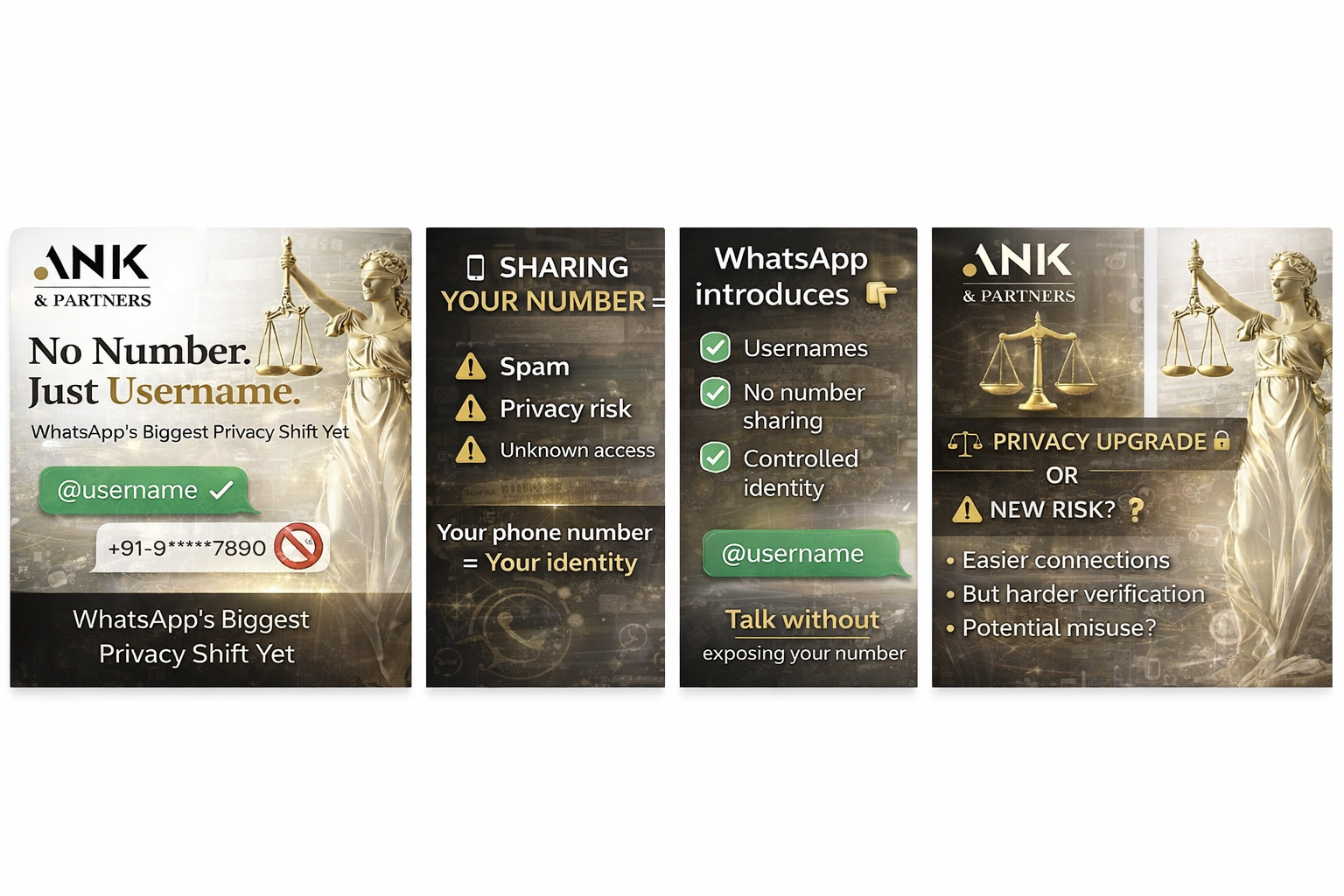
The digital communication landscape is undergoing a subtle yet transformative shift. With WhatsApp reportedly introducing usernames, users may soon be able to interact without sharing their phone numbers—something that has long been a structural limitation of the platform.
At first glance, this may appear to be a simple feature update. However, from a legal, technological, and privacy standpoint, it represents a far more significant evolution.
📌 The Existing Problem: Phone Number as Identity
For years, WhatsApp has functioned on a phone-number-based identity system. While this ensured simplicity and traceability, it also created inherent vulnerabilities:
- Exposure of personal contact details
- Increased risk of spam and unsolicited communication
- Lack of anonymity in professional or public interactions
In essence, a phone number became more than just a contact detail—it became a digital identity marker.
🔄 The Shift: From Contact-Based to Identity-Based Communication
The introduction of usernames changes this paradigm.
Users will now have the option to:
- Communicate without revealing their phone number
- Control how they are discovered and contacted
- Separate personal identity from public interaction
This aligns WhatsApp more closely with platforms like Telegram and Instagram, where identity is not directly tied to a phone number.
⚖️ Legal and Compliance Implications
From a regulatory perspective, this shift introduces both opportunities and complexities.
🛡️ Privacy Enhancement
The feature strengthens user privacy by minimizing unnecessary data exposure—aligning with broader data protection principles such as data minimization and purpose limitation.
⚠️ Risk of Misuse
However, reduced traceability may create challenges in:
- Fraud detection
- Cybercrime investigation
- Identity verification
Authorities and platforms may need to balance anonymity with accountability.
🧠 The Bigger Question: Privacy vs Accountability
The introduction of usernames raises a critical question:
Is digital communication moving toward greater user control, or toward reduced accountability?
While users gain flexibility and privacy, platforms must ensure that this does not lead to increased misuse or regulatory blind spots.
🚀 The Future of Digital Interaction
This development signals a broader trend:
👉 The shift from “who you know (contact)”
👉 To “who you are (identity)”
As digital ecosystems evolve, identity layers—usernames, handles, and verified profiles—will likely replace raw personal data as the primary mode of interaction.
💼 ANK & Partners Insight
At ANK & Partners, we view this as more than a feature update—it is a structural evolution in digital communication.
The intersection of technology, privacy, and regulation will define how such innovations are implemented and governed in the future.
🔚 Conclusion
WhatsApp’s username feature is not merely about convenience—it is about control, privacy, and the redefinition of digital identity.
The real impact will depend on how effectively platforms and regulators strike a balance between user privacy and systemic accountability.