Procedural lapses in criminal investigations can directly impact personal liberty.
Procedural lapses in criminal investigations can directly impact personal liberty.
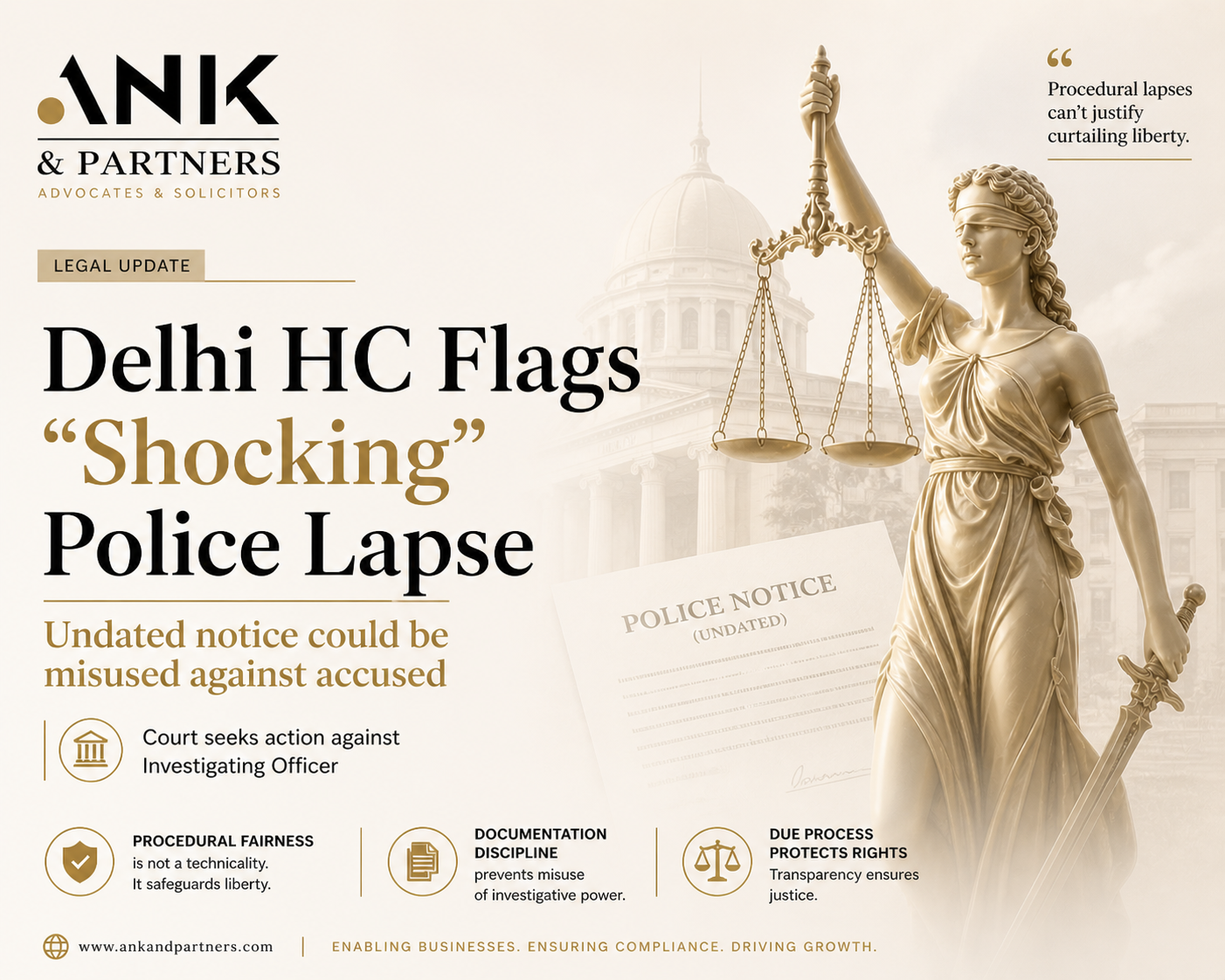
In a strong observation, the Delhi High Court flagged a “shocking” lapse after noticing that an Investigating Officer issued an undated notice asking an accused to join an investigation.
Why does this matter?
Because an undated notice can later be misused to falsely allege that an accused failed to cooperate with the investigation.
The Court observed that such procedural ambiguity creates serious risks and directed that the matter be escalated to the concerned DCP for appropriate action.
Key takeaways:
⚖️ Procedural fairness is not a technicality
⚖️ Investigative transparency protects constitutional rights
⚖️ Documentation errors can lead to misuse of power
⚖️ Criminal procedure must remain accountable
The Court also recorded that the petitioners would not be arrested for now, subject to cooperating through proper written notices.
This ruling reinforces a critical legal principle:
When procedure becomes arbitrary, liberty becomes vulnerable.
For criminal lawyers, compliance professionals, and law enforcement agencies—this is an important reminder that due process begins with documentation discipline.