FSSAI Tightens Pan Masala Packaging Rules: Plastic Packaging Out
FSSAI Tightens Pan Masala Packaging Rules: What Businesses Need to Know
A packaging regulation has changed the compliance landscape for pan masala manufacturers in India.
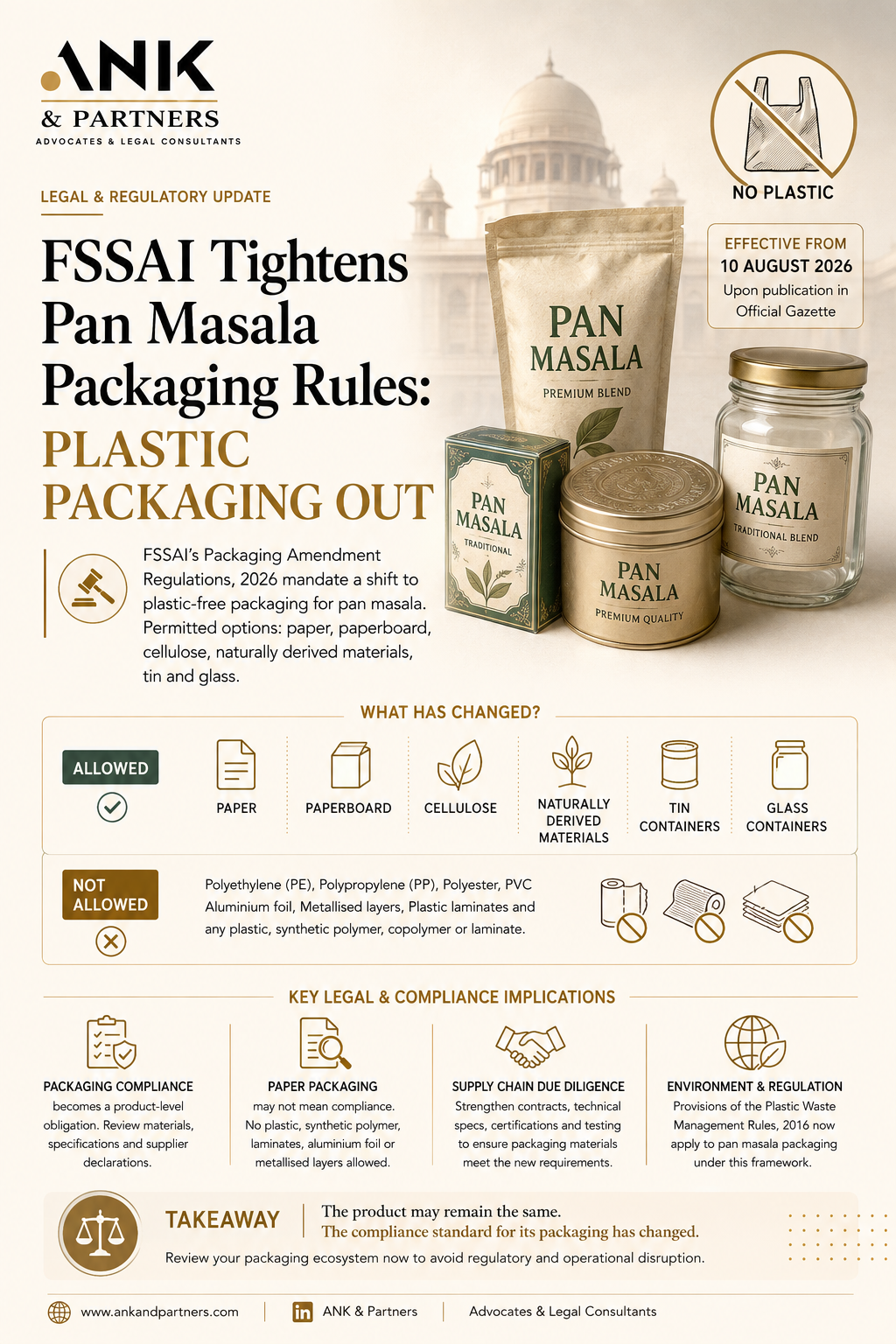
The Food Safety and Standards Authority of India (FSSAI) has introduced the Food Safety and Standards (Packaging) Amendment Regulations, 2026, bringing specific packaging requirements for pan masala into the regulatory framework. The final amendment was published in the Official Gazette on 10 August 2026 and came into force upon publication.
Importantly, this is not a ban on pan masala as a product. The amendment specifically addresses the materials that may be used for its packaging.
What has changed?
Under the amended framework, pan masala may be packaged using:
- Paper
- Paperboard
- Cellulose
- Other naturally derived materials that are completely plastic-free
- Tin containers
- Glass containers
The permitted paper-based and naturally derived materials must not contain plastic, synthetic polymers, copolymers or laminates. The specified restrictions also extend to aluminium foil and metallised layers.
The amendment specifically identifies materials such as polyethylene, polypropylene, polyester and PVC among those excluded from the permitted packaging materials.
Key Legal & Compliance Implications
1. Packaging compliance becomes a product-level obligation
Manufacturers will need to review packaging specifications, procurement arrangements and supplier declarations to ensure that packaging materials meet the amended requirements.
2. “Paper packaging” may not automatically mean compliance
A paper outer layer containing plastic, synthetic polymer, laminate, aluminium foil or metallised layers may fall outside the permitted specifications.
3. Supply-chain due diligence becomes critical
Businesses may need stronger contractual controls, technical specifications, vendor certifications and testing protocols to demonstrate that packaging inputs comply with the new requirements.
4. Environmental compliance is increasingly intersecting with product regulation
The amendment also brings specified provisions of the Plastic Waste Management Rules, 2016 into the regulatory framework applicable to pan masala packaging.
Business Impact
For manufacturers, packaging suppliers, distributors and FMCG businesses, the immediate priority should be a compliance gap assessment.
Businesses should consider reviewing:
- Existing packaging materials and specifications
- Plastic and laminate components
- Aluminium/metallised layers
- Supplier declarations and certifications
- Packaging contracts and procurement standards
- Inventory transition requirements
- Labelling and regulatory documentation
- Internal compliance and quality-control processes
The Bigger Picture
This development reflects a broader regulatory direction: packaging is increasingly becoming a core compliance issue rather than merely a branding or procurement decision.
For businesses operating in regulated consumer sectors, sustainability, food safety, environmental obligations and supply-chain governance are becoming increasingly interconnected.
Takeaway:
The product may remain the same. The compliance standard for its packaging has changed.
Businesses should review their packaging ecosystem now — before regulatory compliance becomes an operational disruption.