Delhi’s ‘As-Is, Where-Is’ Policy: Regularisation Without Guardrails Raises Urban Planning Concerns
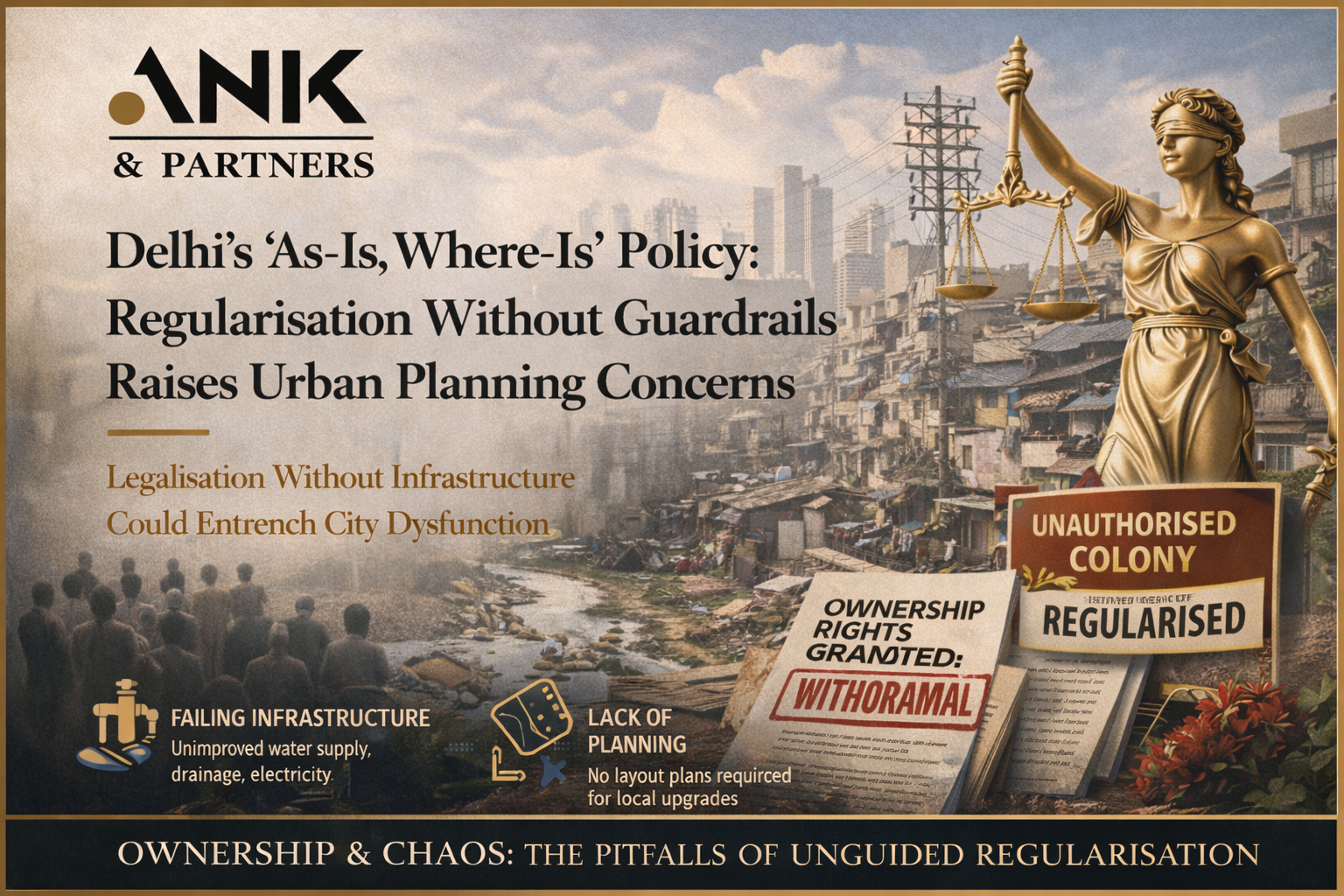
At first glance, Delhi’s move to regularise over 1,500 unauthorised colonies appears transformative—turning illegality into legitimacy overnight. But beneath this promise of ownership lies a critical question: what happens when you legalise without fixing what’s broken?
The government’s new policy adopts an “as-is, where-is” approach—meaning colonies will be regularised in their current condition, without requiring approved layout plans or prior infrastructure upgrades. This marks a sharp departure from earlier frameworks, where regularisation was tied to planned improvements in essential services such as water supply, sewage systems, and road layouts.
While this simplification accelerates ownership rights, it also removes a crucial safeguard. Experts warn that the absence of mandatory planning conditions could effectively legitimise unregulated construction, locking in years of haphazard urban growth.
The concern is not merely technical—it is structural. Without enforced layout plans, there is little scope to systematically upgrade infrastructure. Narrow lanes, inadequate drainage, tangled electricity networks, and overcrowded housing patterns risk becoming permanent features rather than temporary shortcomings.
Urban planners argue that this approach may prioritise short-term political and administrative gains over long-term sustainability. By granting legality first and deferring infrastructure, the policy could create “regularised dysfunction”—areas that are legally recognised but functionally stressed.
To be sure, the policy offers undeniable benefits. It brings legal security to millions of residents, makes properties “bankable,” and integrates informal settlements into the formal economy. But the trade-off is significant: legal clarity without urban discipline.
The larger issue, therefore, is not whether regularisation is needed—it clearly is. The real challenge lies in how it is done. Without “guardrails” such as planning norms, infrastructure mandates, and phased redevelopment, regularisation risks becoming a one-time administrative fix rather than a foundation for sustainable urban growth.
In the end, Delhi’s policy reflects a deeper urban dilemma—can a city correct decades of unplanned expansion by accepting it as it is, or must it reshape it before granting legitimacy? The answer will determine whether this move becomes a model for inclusive urban reform—or a cautionary tale in planning compromise.