⚖️ Delhi High Court: No Handwriting Comparison Without Informing Parties
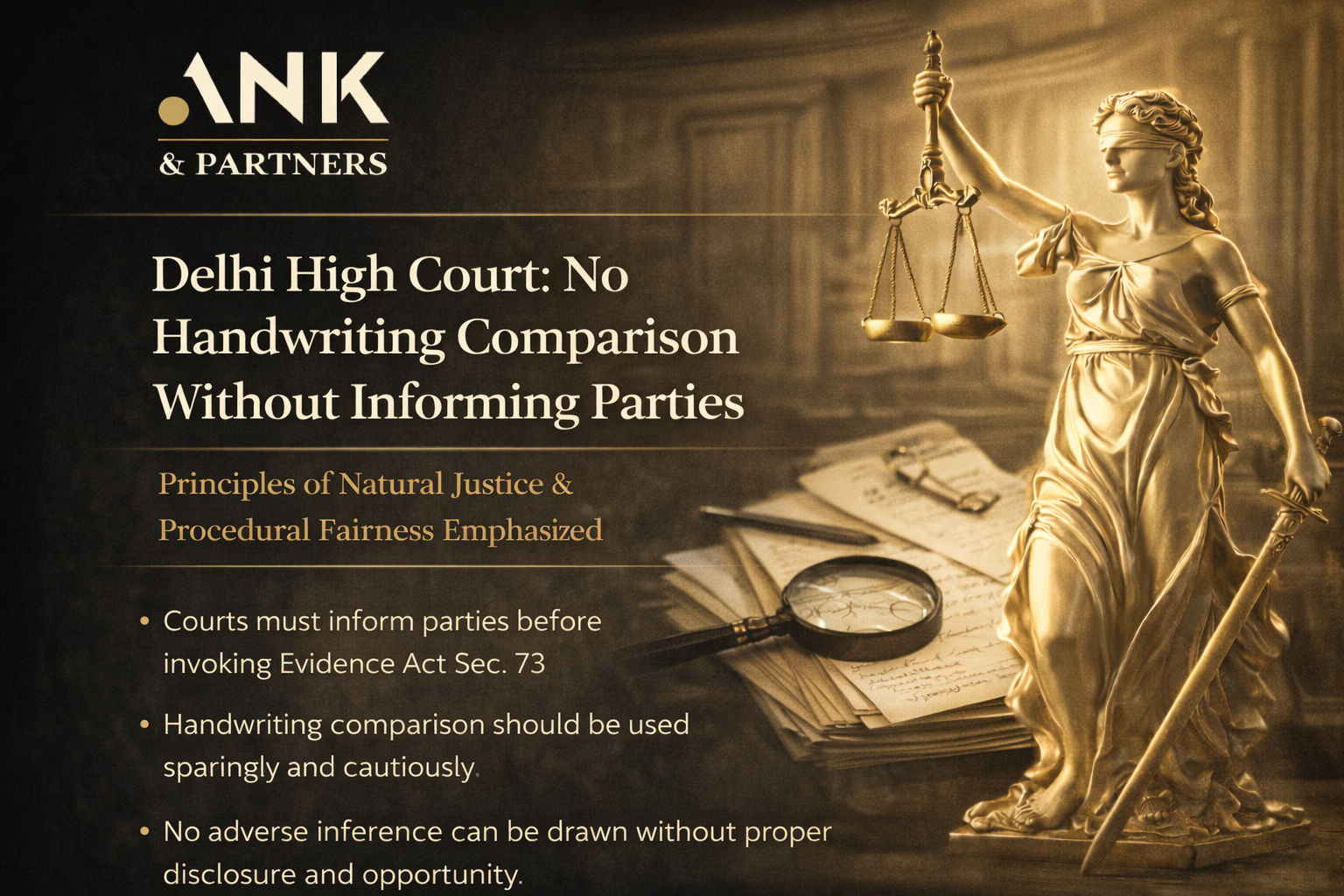
⚖️ Delhi High Court: No Handwriting Comparison Without Informing Parties
In a crucial ruling, the Delhi High Court has held that a judge cannot compare handwriting samples of parties without informing them and giving an opportunity to respond.
The Court emphasized that such actions violate principles of natural justice and procedural fairness, especially when the outcome may adversely affect a party.
🔍 Key Legal Takeaways:
- Courts must inform parties before invoking Section 73 of the Evidence Act
- Handwriting comparison should be used sparingly and cautiously
- No adverse inference can be drawn without proper disclosure and opportunity
- Reliance on such undisclosed comparison renders findings legally unsustainable
⚖️ Insight by ANK & Partners
This judgment reinforces a core principle of justice:
👉 Evidence cannot be evaluated in secrecy.
Even when courts have statutory powers, their exercise must remain:
- Transparent
- Procedurally fair
- Open to challenge and scrutiny
The ruling is a strong reminder that process integrity is as important as the outcome.
#DelhiHighCourt #EvidenceLaw #NaturalJustice #Litigation #LegalInsights #DueProcess #ANKPartners