Congress Withdraws from Baramati Bypoll, Clears Path for Sunetra Pawar in Strategic Move
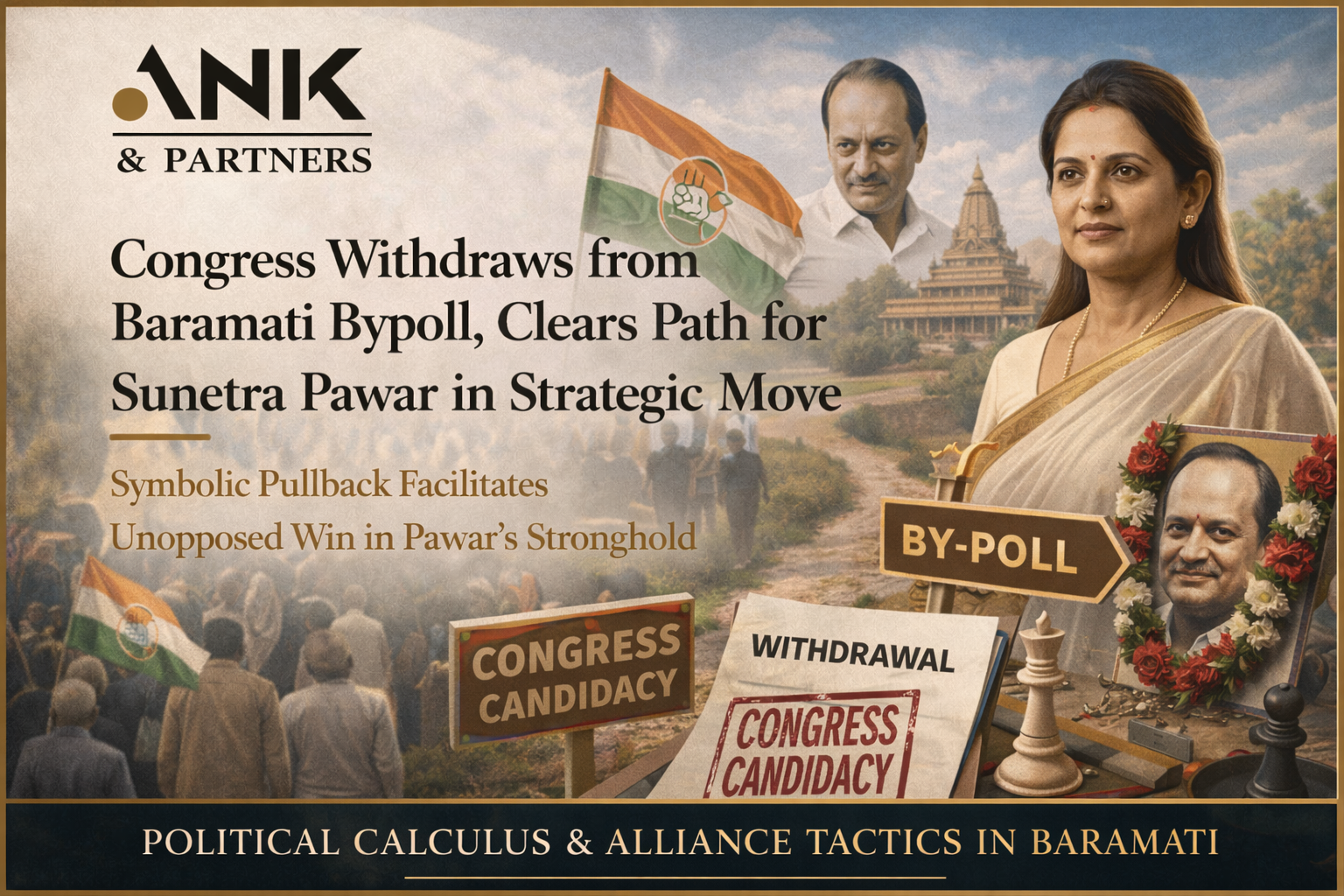
In a move that blends political strategy with symbolic messaging, the Congress has withdrawn its candidate from the high-profile Baramati by-election—effectively clearing the path for Maharashtra Deputy Chief Minister Sunetra Pawar and reshaping the electoral narrative in one of the state’s most influential constituencies.
The decision, described as a “mark of respect” for late leader Ajit Pawar, reflects more than sentiment—it underscores the complex interplay of alliances, legacy politics, and electoral pragmatism. Baramati, long considered a stronghold of the Pawar family, has now become the stage for a rare political consensus, at least on the surface.
Initially, the Congress had fielded a candidate, setting the stage for a competitive contest. However, sustained appeals from key political figures and the broader context of Ajit Pawar’s untimely demise appear to have shifted the party’s stance. The withdrawal now positions Sunetra Pawar for what could be a largely uncontested victory—an outcome that carries both emotional and strategic weight.
The bypoll itself was necessitated by the sudden death of Ajit Pawar in a plane crash earlier this year, an event that not only created a political vacuum but also invoked a sense of continuity within the Pawar legacy. Sunetra Pawar’s candidature is widely seen as both a tribute and a transition of political authority within the family.
Yet, beneath the surface, the development raises deeper questions. Is this a gesture of respect—or a calculated move to maintain coalition harmony and avoid vote fragmentation? In a political landscape where alliances are often fluid, such decisions can carry long-term implications far beyond a single constituency.
Ultimately, the Baramati bypoll is no longer just an election—it has evolved into a reflection of how Indian politics negotiates between emotion, legacy, and strategy. And in stepping aside, Congress has ensured that this contest will be remembered as much for what didn’t happen as for what did.